Diet Links Mouth and Joint Health
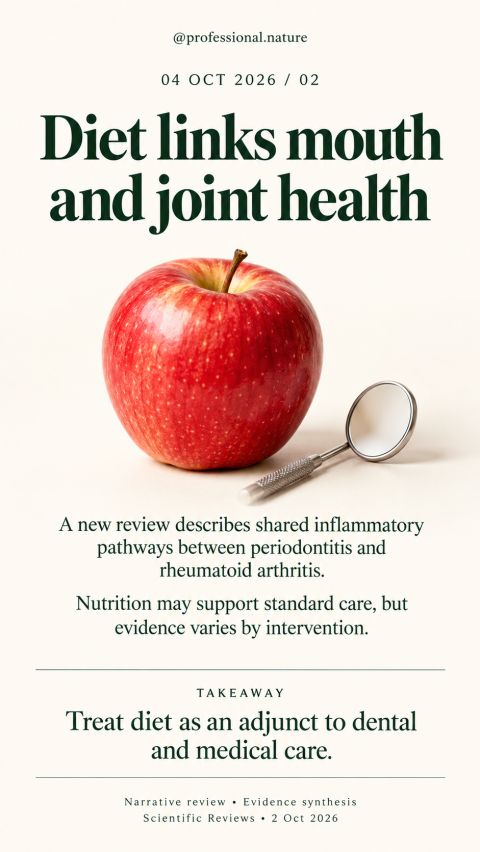
Mouth and joint health may be more closely connected than they first appear. Research has explored shared inflammatory pathways between periodontitis and rheumatoid arthritis. Nutrition may also play a supportive role, although evidence differs across dietary interventions.
Periodontitis is a chronic inflammatory condition that affects the tissues around the teeth. Rheumatoid arthritis is also driven by inflammation, but it mainly affects the joints. Researchers have therefore investigated possible biological connections between these conditions.
Shared Inflammatory Pathways
Inflammation plays an important role in both diseases. Certain immune responses and inflammatory signals may contribute to tissue damage in the gums and joints.
Studies have also examined whether changes in the oral microbiome could influence inflammation elsewhere in the body. These findings are scientifically interesting, but researchers still need stronger evidence to clarify the relationship.
An association does not prove that one condition directly causes the other.
Can Diet Support Mouth and Joint Health?
A balanced diet provides nutrients that support normal immune function and tissue health. Fruits, vegetables, whole grains, legumes, nuts and other nutrient-rich foods can form part of a healthy eating pattern.
Researchers have also studied specific nutrients and dietary approaches for inflammatory conditions. Results vary depending on the intervention, population and study design.
For this reason, nutrition should complement established treatment rather than replace it.
Dental and Medical Care Still Matter
People with periodontitis should continue appropriate dental care. This may include professional cleaning, periodontal treatment and good daily oral hygiene.
People with rheumatoid arthritis should follow the treatment plan recommended by their healthcare team. Diet alone cannot replace medical therapy for an autoimmune disease.
A coordinated approach may be particularly useful when oral and systemic inflammatory conditions occur together.
Key Takeaway
Research suggests a possible connection between inflammation in the mouth and joints. Diet may support general health and complement professional treatment.
However, current evidence does not justify using nutrition as a stand-alone treatment for either condition. The best approach combines healthy eating with appropriate dental and medical care.