Why Is Bowel Cancer Rising in Younger Adults?
Bowel cancer in younger adults has become an important area of health research. Scientists are investigating why more cases are being diagnosed before the age of 50 and which factors may contribute to this trend.
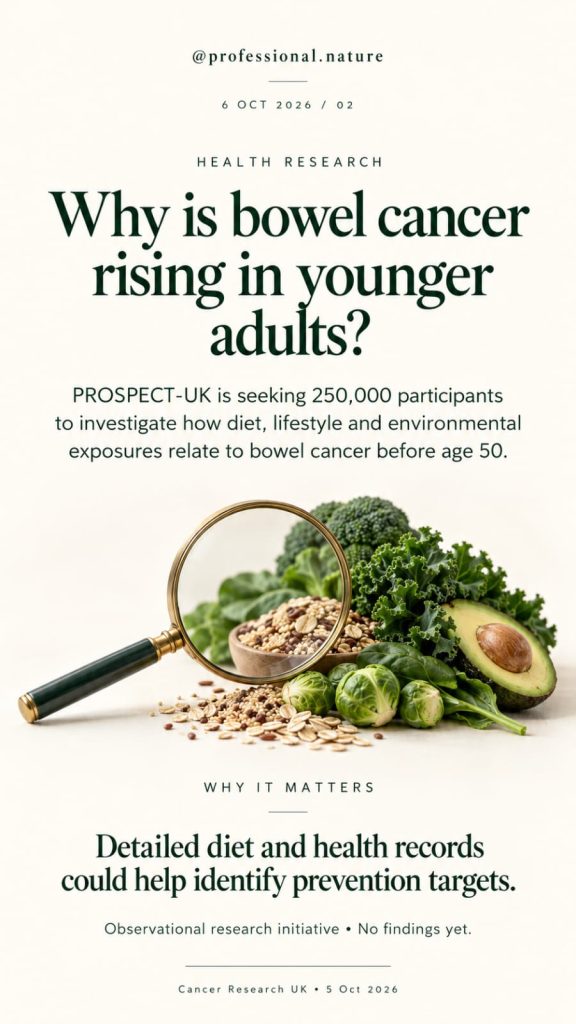
A major UK research initiative called PROSPECT-UK aims to recruit around 250,000 participants. Researchers plan to examine detailed information about diet, lifestyle, health and environmental exposures. The goal is to better understand factors associated with developing bowel cancer at a younger age.
Why Are Researchers Studying Diet?
Diet is one of several areas being investigated. Researchers want to understand whether long-term eating patterns may be associated with differences in cancer risk.
Foods rich in fiber, including whole grains, vegetables, fruits, legumes, nuts and seeds, are already important components of a balanced diet. However, the new research is not designed to identify one particular food as a cause or a preventive treatment.
Lifestyle and Environmental Factors
Researchers will also examine lifestyle and environmental exposures. Physical activity, body weight, smoking, alcohol consumption and other health-related factors may provide valuable information when studied alongside dietary habits.
Looking at these factors together is important because cancer development is complex. It usually cannot be explained by one behavior or one food alone.
Why Does This Research Matter?
A very large study population can help researchers identify patterns that may be difficult to detect in smaller studies. Detailed diet and health records could eventually help scientists identify possible prevention targets and groups that may benefit from closer monitoring.
However, PROSPECT-UK is a research initiative and does not yet provide new findings about the causes of early-onset bowel cancer. The study will need time to collect and analyze participant data.
What Should People Do Now?
Current evidence supports maintaining a balanced diet, staying physically active, avoiding smoking and following established health recommendations. People should also pay attention to persistent changes in bowel habits, unexplained bleeding or other concerning symptoms and seek appropriate medical advice.
Takeaway
Research into bowel cancer in younger adults may help clarify how diet, lifestyle, health and environmental factors interact. Large studies such as PROSPECT-UK could provide valuable evidence for future prevention strategies, but they do not yet establish specific causes.