Food Processing Changes the Metabolic Response
Food processing may influence how the body responds to a meal, even when foods appear nutritionally similar. New research suggests that looking only at calories and macronutrients may not tell the whole story.
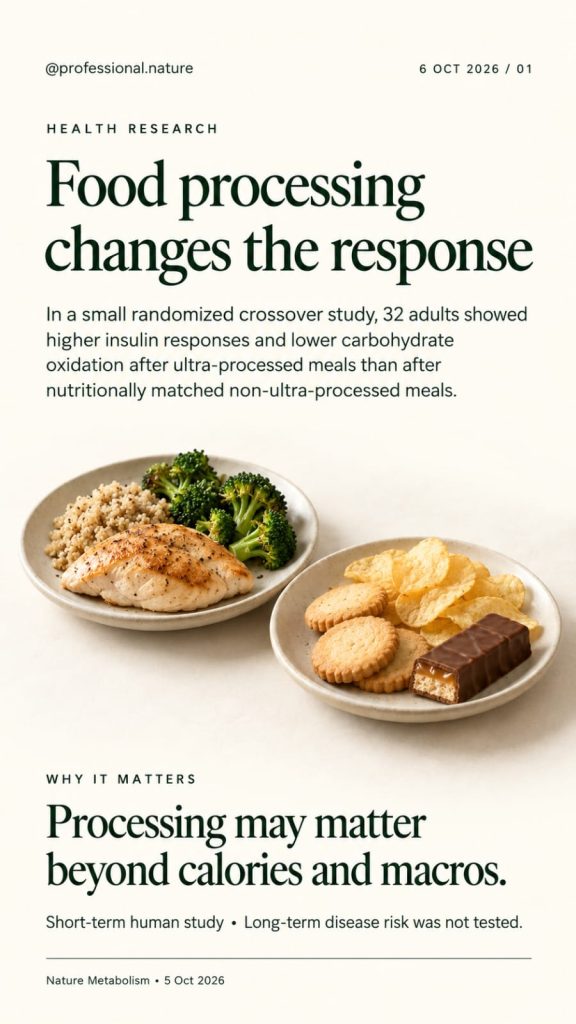
A small randomized crossover study examined 32 adults. Researchers compared responses after participants consumed ultra-processed meals and nutritionally matched non-ultra-processed meals.
What Did the Researchers Find?
Participants showed higher insulin responses after the ultra-processed meals. Researchers also observed lower carbohydrate oxidation compared with the less-processed meals.
These findings suggest that the degree of food processing could influence short-term metabolic responses after eating.
Why Could Food Processing Matter?
Processing can change several characteristics of food. It may alter food structure, texture, eating rate and how nutrients become available during digestion.
Two meals can therefore contain similar amounts of calories, carbohydrates, protein and fat while differing in their physical structure and level of processing.
This raises an important question: should nutritional quality be evaluated only by nutrient composition?
The new findings suggest that food structure and processing may also deserve attention.
What Does This Study Tell Us?
The research provides useful evidence because participants consumed different types of meals under controlled conditions. However, the study involved only 32 adults and focused on short-term metabolic responses.
It did not investigate whether these changes lead to diabetes, obesity, cardiovascular disease or other long-term health outcomes.
Therefore, the findings should not be interpreted as proof that one processed meal directly causes chronic disease.
Looking Beyond Calories and Macros
Calories and macronutrients remain important parts of nutritional assessment. However, researchers increasingly study other characteristics of foods, including processing, structure and the overall dietary pattern.
Whole and minimally processed foods can also provide fiber, vitamins, minerals and other naturally occurring compounds as part of a balanced diet.
Takeaway
Food processing may affect the body’s short-term metabolic response beyond differences in calories and macronutrients.
This small human study found higher insulin responses and lower carbohydrate oxidation after ultra-processed meals compared with nutritionally matched alternatives.
More research is needed to understand whether these short-term metabolic differences have meaningful effects on long-term health.