Saffron and Mood: What Does Clinical Research Show?
Saffron and mood have attracted growing scientific interest. Researchers are investigating whether specific saffron extracts may help support emotional well-being and influence depressive symptoms.
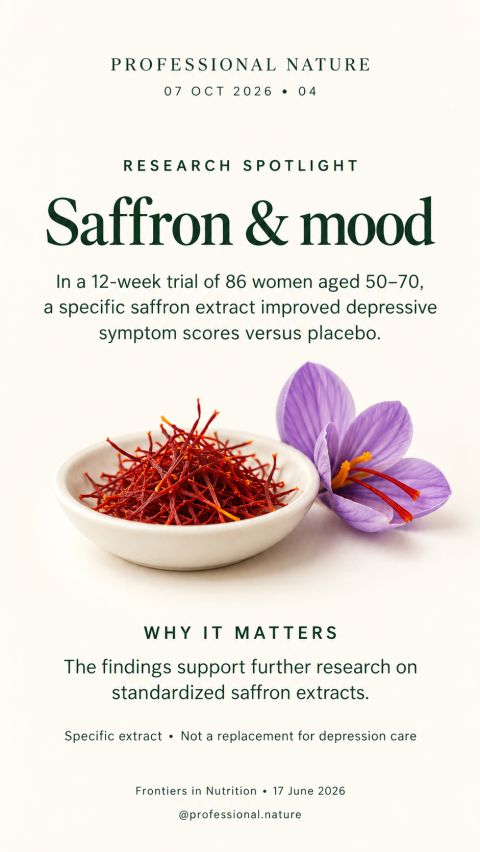
A clinical trial involving 86 women aged 50–70 reported promising results. Over 12 weeks, participants receiving a specific saffron extract showed improvements in depressive symptom scores compared with those receiving a placebo.
What Did the Clinical Trial Find?
The study evaluated the effects of a standardized saffron extract over a 12-week period.
Researchers observed greater improvements in depressive symptom scores in the saffron group than in the placebo group.
These findings suggest that certain saffron preparations deserve further investigation. However, the results apply to the specific extract and study population tested.
Why Is Saffron Being Studied?
Saffron comes from the dried stigmas of Crocus sativus L. and contains several biologically active compounds.
These include crocins, crocetin, safranal and picrocrocin.
Researchers have investigated some of these compounds for their potential biological activities. Proposed mechanisms include effects on oxidative stress, inflammatory pathways and neurotransmitter signaling.
However, laboratory findings do not automatically establish clinical benefits in humans.
Why Does Extract Standardization Matter?
Different saffron products may contain different concentrations of active compounds.
Extraction methods, raw material quality and manufacturing conditions can influence the chemical composition of the final ingredient.
Therefore, results from one clinical trial cannot automatically be applied to every saffron supplement or saffron-containing food.
Reliable research requires clearly identified ingredients, standardized preparations and controlled clinical testing.
What Are the Study Limitations?
Although the findings are encouraging, the trial included only 86 women aged 50–70.
The study lasted 12 weeks and did not establish long-term effectiveness or safety for all populations.
Larger clinical trials are needed to determine which preparations, doses and patient groups may benefit.
Importantly, saffron products should not replace professional assessment or established treatment for depression.
Takeaway
Research on saffron and mood suggests that specific standardized extracts may influence depressive symptom scores under controlled clinical conditions.
The findings support further investigation into saffron’s potential applications in nutritional and mental health research.
However, promising clinical results should not be interpreted as proof that all saffron products have the same effects.
Research source: Frontiers in Nutrition, 17 June 2026.