Iron and Zinc Fortified Whole Wheat
Fortified whole wheat may provide a practical way to increase the iron and zinc content of staple foods. Recent research examined whether adding these minerals before milling could improve nutritional properties without negatively affecting flour and food quality.
Fortified Whole Wheat with Iron and Zinc
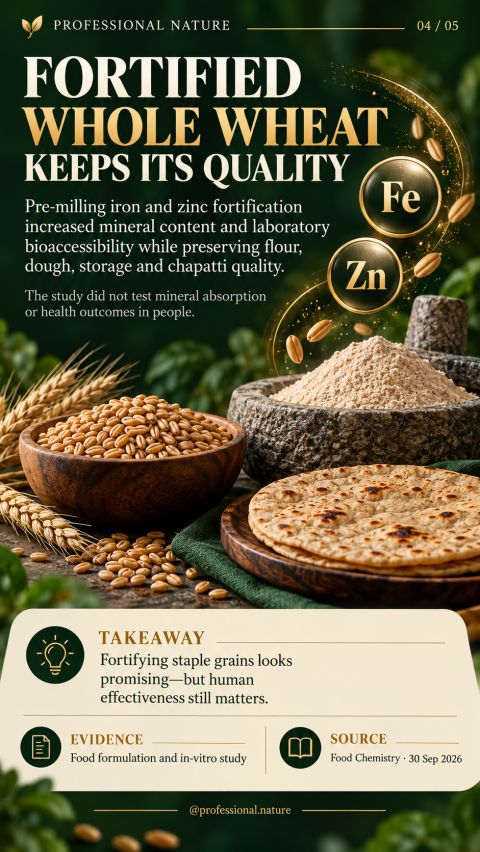
Researchers studied pre-milling fortification of whole wheat with iron and zinc. The process increased the mineral content of the resulting flour and improved laboratory measures of mineral bioaccessibility.
Importantly, the researchers also evaluated several characteristics related to food quality. The fortified wheat maintained acceptable flour properties as well as dough, storage, and chapatti quality.
Why Iron and Zinc Matter
Iron and zinc are essential micronutrients with important biological functions. Iron contributes to normal oxygen transport and energy metabolism, while zinc supports numerous enzymes and normal physiological processes.
Because wheat and other staple grains are consumed regularly by large populations, fortification has been investigated as a potential strategy for increasing dietary intake of important micronutrients.
Bioaccessibility Is Not the Same as Absorption
Although the laboratory results are promising, bioaccessibility does not necessarily mean that the body will absorb and use the minerals to the same extent.
The study evaluated food formulation and in-vitro outcomes. It did not directly measure iron or zinc absorption in people, nor did it investigate whether consuming the fortified products improved health outcomes.
Practical Significance
Fortified whole wheat could provide a useful approach for increasing the micronutrient content of commonly consumed foods while preserving important product characteristics.
However, laboratory improvements should be followed by well-designed human studies. These studies can determine how effectively the added minerals are absorbed and whether fortification produces meaningful nutritional benefits in real-world populations.
Further research will help establish the most appropriate mineral forms, fortification levels, processing methods, and long-term effectiveness.