Zinc Dose for Deficiency: Why Testing Matters
The appropriate zinc dose for deficiency depends on whether a true deficiency has been identified and on the individual’s clinical needs. Zinc is an essential mineral involved in immune function, wound healing, protein synthesis, DNA synthesis, and many other biological processes. However, taking more zinc does not automatically provide greater health benefits.
Zinc Deficiency and Supplementation
A recent 12-month randomized trial investigated zinc supplementation in zinc-deficient nursing-home residents. Researchers compared different supplementation doses and monitored whether participants corrected their zinc deficiency over time.
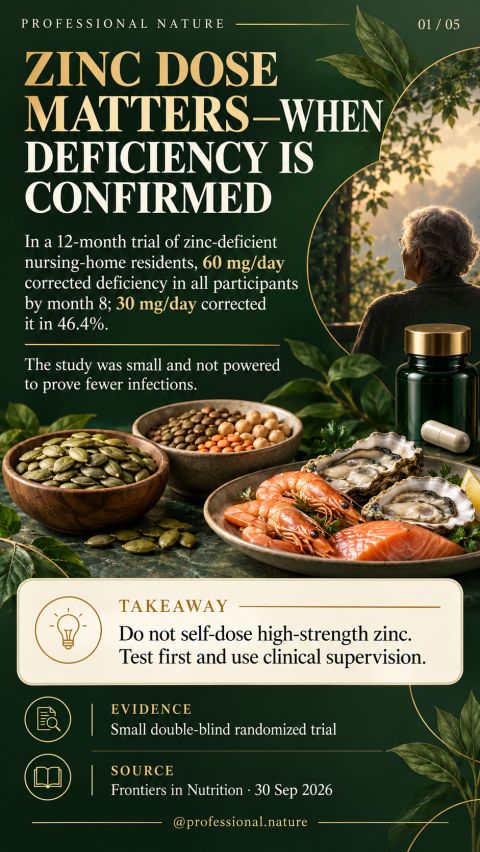
In the study, 60 mg/day corrected zinc deficiency in all participants by month eight, while 30 mg/day corrected deficiency in 46.4% of participants. These findings suggest that zinc dose for deficiency can influence how effectively zinc status is restored in people who have already been identified as deficient.
However, this does not mean that everyone should take high-dose zinc supplements.
Why Zinc Testing Is Important
Zinc requirements vary between individuals. Diet, age, health status, medications, absorption, and existing zinc levels can all influence a person’s needs.
For this reason, supplementation should ideally follow appropriate assessment. A dose used to correct a confirmed deficiency should not automatically be considered suitable for routine supplementation in healthy individuals.
Higher doses can also create problems when used unnecessarily or for prolonged periods. Excessive zinc intake may cause gastrointestinal symptoms and can interfere with the absorption and metabolism of other minerals, particularly copper.
What Did the Study Prove?
The study provides useful information about correcting zinc deficiency, but its limitations are important. It involved a relatively small group of participants and was not designed with sufficient statistical power to establish whether the higher zinc dose reduced infections.
Therefore, correcting a laboratory-confirmed deficiency should not be confused with proving broader clinical benefits.
The Takeaway
The right zinc dose for deficiency should be based on individual assessment rather than self-prescribing high-strength supplements. Testing can help identify whether deficiency exists, while qualified clinical supervision can help determine an appropriate dose and duration.
More zinc is not necessarily better. The goal is to correct deficiency safely and appropriately.