Energy Intake in Elite Soccer Players
Energy intake in soccer players is an important part of sports nutrition. Elite football requires repeated high-intensity activity, endurance, strength, and effective recovery. Players therefore need enough energy to support both training and competition.
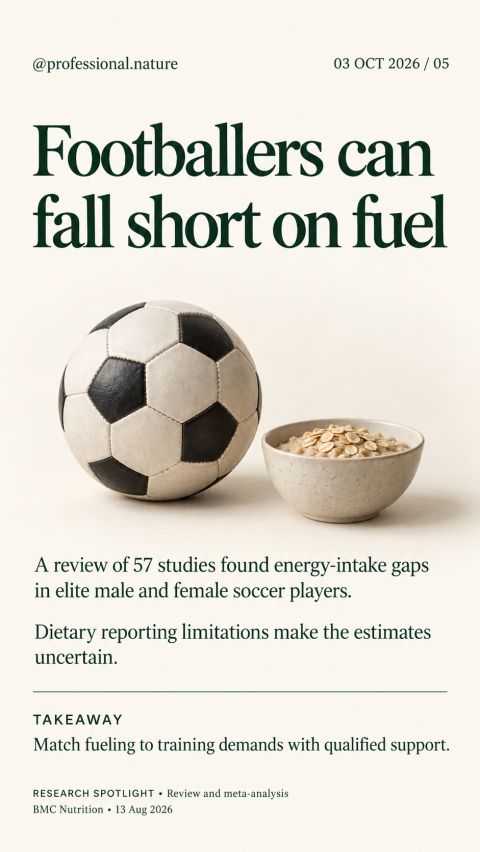
A review of 57 studies examined energy intake in elite male and female soccer players. The research identified potential gaps between reported food intake and the energy demands associated with professional-level football.
Why Energy Intake Matters
Football players use energy during training, matches, recovery, and normal daily activities. Training schedules can also vary considerably throughout a season.
When athletes do not consume enough energy to match these demands, their nutritional strategy may not fully support training and recovery. However, individual requirements vary according to factors such as body size, training load, playing position, and competition schedule.
Energy Intake in Soccer Players
The review found evidence of energy-intake gaps among elite players. Researchers observed this issue in studies involving both male and female footballers.
These findings do not mean that every football player consumes too little energy. Instead, they highlight the importance of evaluating nutrition according to the demands of each athlete.
Challenges in Measuring Food Intake
Measuring dietary intake accurately can be difficult. Many studies rely on athletes recording or recalling what they eat and drink. These methods can introduce reporting errors.
For this reason, researchers should interpret estimated energy gaps carefully. Differences in dietary assessment methods can also make comparisons between studies difficult.
Matching Nutrition to Training
Sports nutrition should respond to changes in training and competition demands. A demanding match day may require a different fueling strategy from a recovery day or a light training session.
Carbohydrates, protein, fats, fluids, and other nutrients all contribute to an athlete’s overall nutrition. The appropriate amounts depend on the athlete and the demands of the sport.
Qualified sports nutrition professionals can help athletes develop individualized strategies that match their training schedules and performance goals.
What Does the Research Tell Us?
The review highlights the importance of monitoring energy intake in soccer players. At the same time, limitations in dietary reporting mean that researchers should interpret the exact size of reported energy gaps with caution.
Future research using reliable dietary and energy-expenditure measurements can provide a clearer understanding of fueling practices in elite football.
Takeaway
Elite soccer players have substantial nutritional demands. Evidence from 57 studies suggests that reported energy intake may sometimes fall short of those demands in both male and female players.
The key message is not simply to eat more. Athletes should match fueling strategies to individual training demands, competition schedules, recovery needs, and professional nutritional guidance.
Source: Review and meta-analysis, BMC Nutrition, 13 August 2026.