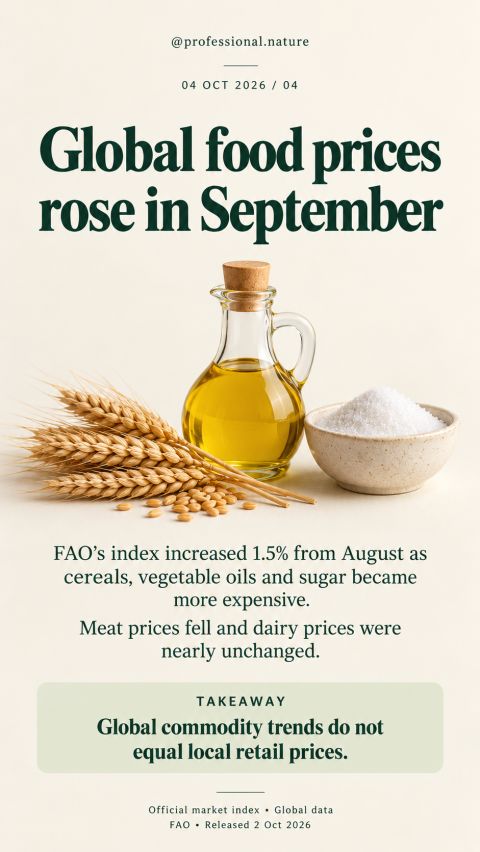
Global Food Prices Rose in September
Global food prices increased in September, according to the latest FAO Food Price Index. The index rose by 1.5% compared with August. Higher prices for cereals, vegetable oils and sugar drove much of this increase.
What Drove Prices Higher?
Several food categories contributed to the September increase. Cereal prices moved higher during the month. Wheat, maize and rice play an important role in the international food market. Changes in their prices can therefore affect food supply chains around the world.
Vegetable oil prices also increased. Production levels, export availability and international demand can influence this market. Weather conditions in major producing regions may also affect supply.
Sugar was another contributor to the rise. Changes in production forecasts and global demand can quickly influence international sugar markets.
Different Trends Across Food Categories
Not every category became more expensive. Meat prices fell during the period. Dairy prices showed little change.
These differences show why the FAO index combines several food categories. A rise in the overall index does not mean that every commodity follows the same trend.
Global Food Prices and Local Markets
Global food prices can influence food systems, but they do not directly determine supermarket prices.
Many other factors affect the final price consumers pay. These include transportation, processing, packaging and energy costs. Exchange rates, import duties and local supply also play important roles.
For example, an increase in an international cereal price may not immediately change the price of bread in every country. Local production and supply conditions can reduce or delay the impact.
Why These Trends Matter
Food commodity indexes help researchers, businesses and policymakers follow changes in international markets. They can also provide useful information about pressure on food supply chains.
However, consumers should interpret these indexes carefully. International commodity trends and local retail prices are related, but they are not the same.
Key Takeaway
The September data showed higher prices for cereals, vegetable oils and sugar. Meat moved in the opposite direction, while dairy remained relatively stable.
The FAO Food Price Index provides a useful view of international food-market trends. Local prices, however, depend on many additional economic and supply factors