Meal Timing Is Personal
Meal timing has become an increasingly important topic in nutrition research. Scientists are exploring whether the time we eat and the number of meals we consume may relate to diet quality and metabolic health.
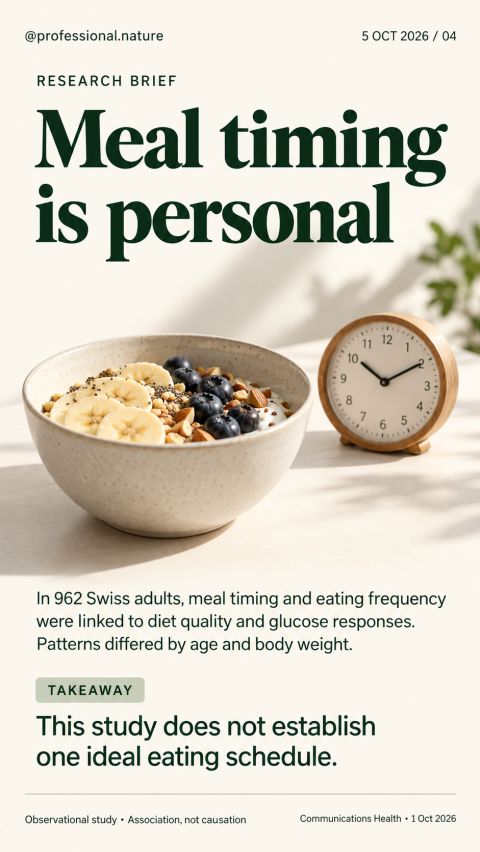
A study involving 962 Swiss adults examined eating schedules, meal frequency, diet quality and glucose responses. The researchers found that these patterns varied among individuals and were also associated with factors such as age and body weight.
Why Meal Timing May Matter
Our bodies follow daily biological rhythms that influence many processes, including metabolism. For this reason, researchers are interested in whether the timing of food intake could be related to the way the body handles nutrients and glucose.
However, eating habits are influenced by many factors. Work schedules, sleep, physical activity, age, appetite, lifestyle and personal preferences can all affect when and how often someone eats.
Different People, Different Patterns
The study found relationships between eating schedules, diet quality and glucose responses. However, these findings do not establish that one specific schedule directly causes better health.
This distinction is important. An eating pattern that fits one person may not be suitable for another. Individual nutritional requirements and daily routines should also be considered.
Quality Still Matters
When considering meal timing, the nutritional quality of food remains important. Vegetables, fruits, whole grains, legumes, quality protein sources and healthy fats can all contribute to a balanced eating pattern.
Meal frequency alone also does not determine whether a diet is healthy. The overall combination of food quality, quantity, lifestyle and individual needs provides a more complete picture.
A Personalized Approach
Rather than following a rigid eating schedule simply because it is popular, people can consider their daily routine, nutritional requirements and health goals. Future research may help identify which eating patterns work best for different groups.
Takeaway
Current evidence does not establish one ideal eating schedule for everyone. A balanced diet and an eating routine that suits individual needs may be a more practical approach.