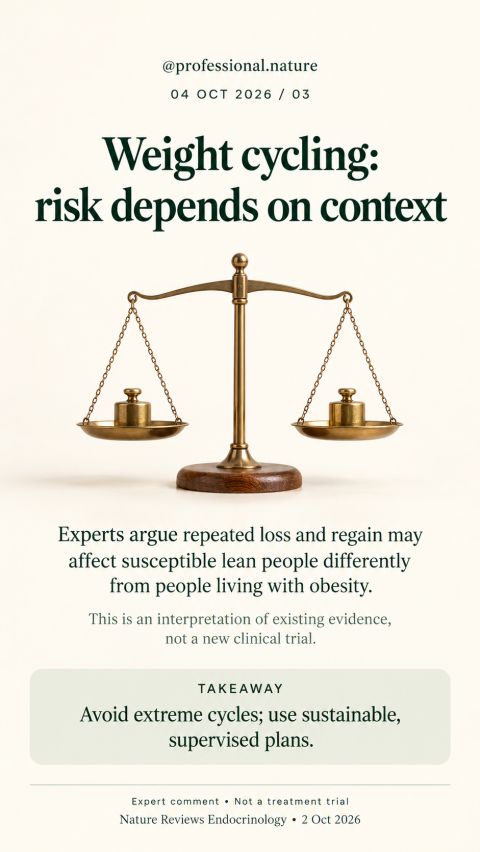
Weight Cycling: Risk Depends on Context
Weight cycling describes repeated periods of weight loss followed by weight regain. People often call this pattern “yo-yo dieting.” Researchers continue to study its possible effects on metabolism, body composition and long-term health.
The available evidence suggests that context matters. The same pattern may not have the same meaning or health impact for every person.
Why Weight Cycling Happens
Many factors can lead to repeated changes in body weight. Restrictive diets are one common reason. A person may lose weight quickly but struggle to maintain the diet over time.
Lifestyle changes, stress, illness and changes in physical activity can also affect body weight. After weight loss, the body may respond with changes in appetite and energy use. These responses can make long-term weight maintenance difficult for some people.
Health Effects May Differ
Researchers have examined possible links between repeated weight loss and regain and several health outcomes. However, interpreting these studies can be difficult.
People who live with obesity may have different baseline health risks from lean individuals. Age, body composition, diet quality, physical activity and medical conditions can also influence the results.
For this reason, researchers should consider a person’s overall health rather than viewing changes on the scale in isolation.
Focus on Sustainable Weight Management
Extreme cycles of restriction and regain may not provide a sustainable approach to health. A more practical strategy focuses on habits that people can maintain over time.
Balanced nutrition, adequate protein, regular physical activity and sufficient sleep can support a healthier lifestyle. Resistance exercise can also help maintain muscle during periods of weight loss.
Individual needs still vary. People planning major changes in body weight may benefit from guidance from qualified healthcare or nutrition professionals.
Key Takeaway
Weight cycling is a complex issue, and its potential effects depend on individual circumstances. Current evidence does not support treating every cycle of weight loss and regain as having the same health consequences.
A sustainable and supervised approach to weight management may therefore be more appropriate than repeated extreme dieting.