Nutrition Before Surgery Matters
Nutrition before surgery can be an important part of assessing the health of older patients. Nutritional status may influence recovery, resilience and the ability to cope with the physical stress associated with an operation.
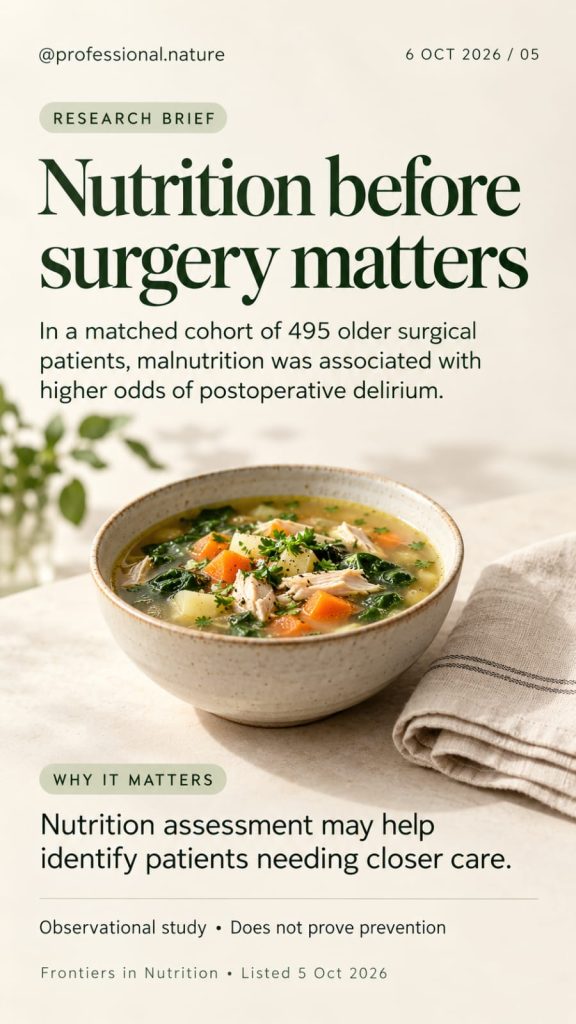
A recent observational study examined 495 older surgical patients. Researchers found that malnutrition was associated with higher odds of postoperative delirium.
What Is Postoperative Delirium?
Postoperative delirium is a sudden change in attention, awareness and thinking that can occur after surgery. It is particularly important in older adults and may complicate recovery.
Several factors can contribute to its development. These may include age, underlying illness, medications, the type of surgery and a patient’s general health before the procedure.
Why Nutritional Status Matters
Malnutrition can involve inadequate intake of energy, protein or essential nutrients. In older adults, it may also occur alongside loss of muscle mass, reduced appetite or other health problems.
Assessing nutrition before surgery may therefore provide useful information about a patient’s overall condition and help healthcare teams identify individuals who could require closer monitoring or additional nutritional support.
What Did the Study Find?
In the matched cohort, malnutrition was associated with greater odds of developing delirium following surgery.
However, this was an observational study. It shows an association but does not prove that malnutrition directly caused postoperative delirium.
It also does not prove that providing nutritional treatment before an operation will prevent delirium. Clinical intervention studies would be needed to answer that question.
A Broader Approach to Surgical Care
Preoperative care involves more than preparing for the surgical procedure itself. Evaluating nutritional status, medical conditions, medications, physical function and other individual risk factors can provide a more complete picture of patient health.
For older adults in particular, early identification of nutritional problems may allow healthcare professionals to determine whether further assessment or support is appropriate.
Takeaway
Nutrition before surgery should be considered as part of a broader preoperative assessment. Identifying malnutrition may help recognize older patients who need closer care, but current observational evidence does not establish that nutritional intervention prevents postoperative delirium.