Coffee and Brain Health: What Does Research Show?
Coffee and brain health have become important topics in nutritional research. Scientists are exploring whether long-term coffee consumption is associated with cognitive function, healthy ageing and dementia risk.
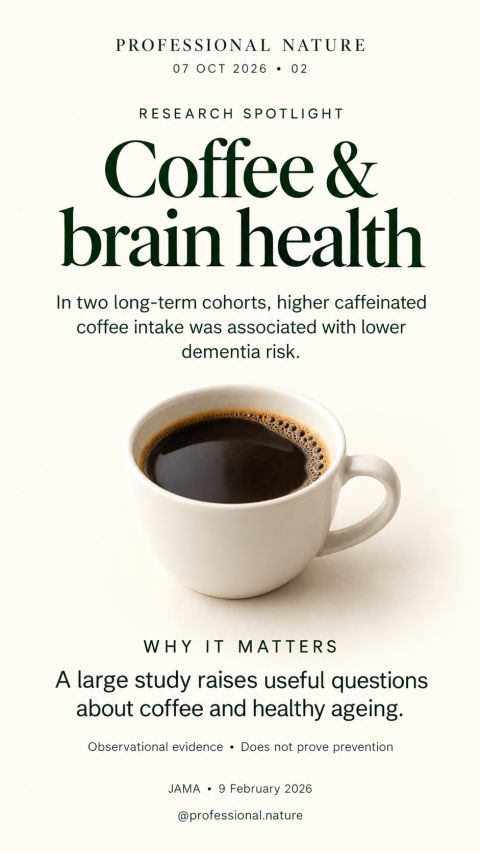
A study reported in JAMA examined data from two long-term cohorts. Researchers found that higher caffeinated coffee intake was associated with a lower risk of dementia.
Although the findings are interesting, the study was observational. It does not establish that drinking coffee prevents dementia.
What Did the Research Find?
Researchers analyzed long-term information about participants’ coffee consumption and health outcomes.
The results showed an association between higher caffeinated coffee intake and lower dementia risk.
This finding adds to scientific interest in the relationship between dietary habits and brain health.
However, an association does not necessarily mean that coffee itself produces a protective effect.
Other lifestyle, dietary and health factors may influence the observed relationship.
Why Are Scientists Interested in Coffee?
Coffee contains several naturally occurring compounds, including caffeine, chlorogenic acids and other polyphenols.
Researchers have investigated these substances for their potential effects on biological pathways associated with oxidative stress, inflammation and nervous system function.
Caffeine also influences alertness by acting on adenosine receptors in the brain.
However, short-term improvements in alertness should not be confused with proven long-term protection against cognitive decline.
Does Coffee Prevent Dementia?
Current observational findings cannot establish that coffee prevents dementia.
Even large studies may be affected by differences in participants’ lifestyles, underlying health conditions and other factors.
People who consume coffee regularly may also differ from non-coffee drinkers in ways that influence their long-term health.
Therefore, controlled research and additional evidence are needed to clarify whether the observed association reflects a direct biological effect.
What About Daily Coffee Consumption?
Individual responses to caffeine vary.
Factors such as age, caffeine sensitivity, medication use, pregnancy and existing health conditions can influence how much coffee is appropriate.
Excessive caffeine may contribute to sleep disturbances, anxiety or palpitations in susceptible individuals.
Maintaining good sleep, regular physical activity, balanced nutrition and cardiovascular health remains important for healthy ageing.
Why Does This Research Matter?
The relationship between coffee and brain health deserves further investigation because coffee is consumed worldwide.
Large cohort studies can identify patterns that help researchers develop new scientific questions.
Future studies may clarify whether particular coffee compounds, preparation methods or consumption patterns influence cognitive outcomes.
Takeaway
Research suggests an association between higher caffeinated coffee consumption and lower dementia risk in two long-term cohorts.
However, these findings do not prove that coffee prevents dementia or that increasing caffeine intake will improve brain health.
The results support continued research into coffee, nutrition and healthy ageing.
Research source: JAMA, 9 February 2026.