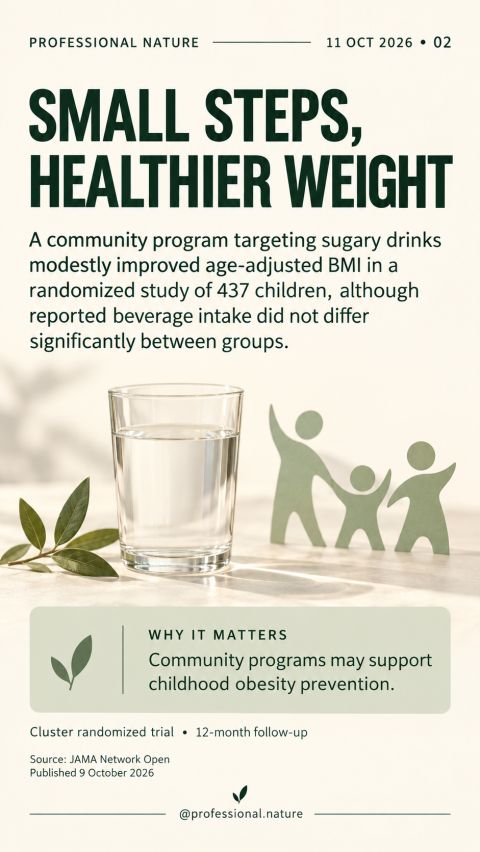
Small Steps, Healthier Weight: Childhood Obesity Prevention
Childhood obesity prevention is an important public health priority. Researchers are exploring how community-based programs can support healthier habits among children and families.
A cluster randomized trial published in JAMA Network Open examined a community intervention targeting sugary drinks.
The study included 437 children and followed participants for 12 months. Researchers reported a modest improvement in age-adjusted body mass index (BMI) in the intervention group.
However, reported beverage consumption did not differ significantly between the groups.
What Did the Study Find?
The researchers evaluated whether a community program focused on sugary drinks could influence children’s weight-related outcomes.
After 12 months, the intervention showed a modest favorable effect on age-adjusted BMI.
This result suggests that community-based approaches may contribute to childhood obesity prevention.
However, the researchers did not observe a statistically significant difference in reported beverage intake between the study groups.
Therefore, the findings do not establish that reduced sugary drink consumption directly caused the BMI improvement.
Why Are Sugary Drinks Important?
Sugar-sweetened beverages can contribute additional calories to children’s diets without providing the same nutritional benefits as many whole foods.
Frequent consumption may increase overall energy intake, depending on the child’s dietary pattern and individual needs.
Water is generally a suitable everyday hydration choice for children.
However, healthy nutrition involves more than replacing one beverage.
Balanced meals, appropriate physical activity, adequate sleep and supportive family routines also matter.
How Can Community Programs Help?
Community interventions aim to improve health-related behaviors beyond individual households.
They may involve schools, families, local organizations and healthcare professionals.
Such programs can help make healthier choices more accessible and practical.
For example, improving access to drinking water and providing age-appropriate nutrition education may support positive habits.
The effectiveness of these strategies can vary between communities.
Understanding BMI in Children
BMI is a screening measure based on height and weight.
For children, healthcare professionals interpret BMI in relation to age and sex rather than using adult BMI categories.
BMI alone does not provide a complete picture of a child’s health.
Growth patterns, nutritional status, physical development and other clinical factors also require consideration.
For this reason, childhood health programs should prioritize overall well-being rather than appearance or rapid weight loss.
What Are the Study Limitations?
Although the trial used a randomized design, the intervention was assigned at the community or group level.
The study followed 437 children for 12 months.
The improvement in age-adjusted BMI was modest, and reported beverage intake did not differ significantly between groups.
These findings leave uncertainty about which parts of the intervention contributed to the observed outcome.
Longer studies may help determine whether similar programs produce sustainable benefits.
Why Does This Research Matter?
Public health interventions often aim to create environments that support healthier everyday decisions.
Even modest changes may be worth investigating when programs reach many families.
However, researchers must examine whether improvements are consistent, clinically meaningful and sustainable.
Community support should also avoid weight stigma and respect children’s individual growth and developmental needs.
Takeaway
Childhood obesity prevention may benefit from supportive community-based approaches.
This randomized study involving 437 children found a modest improvement in age-adjusted BMI following a program targeting sugary drinks.
However, the study did not demonstrate a significant difference in reported beverage consumption.
The findings support further investigation into practical, family-centered strategies for healthier childhood development.
Research source: JAMA Network Open, 9 October 2026.