Muscle Health Beyond Protein: Strength, Function and Nutrition
Muscle health is an essential part of healthy ageing, physical independence and overall well-being. Although protein intake plays an important role in maintaining muscle tissue, scientists increasingly emphasize that healthy muscles involve much more than muscle mass alone.
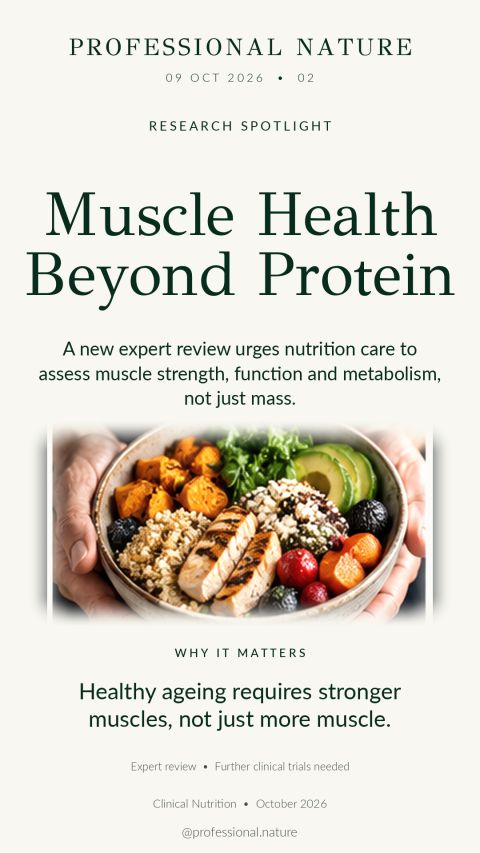
An expert review published in Clinical Nutrition highlights the importance of evaluating muscle strength, physical function and metabolic health alongside muscle quantity.
The review encourages a broader approach to nutritional care, particularly for older adults and individuals at risk of declining physical performance.
Why Is Muscle Health More Than Muscle Mass?
Muscle mass refers to the amount of muscle tissue in the body. However, having more muscle does not always mean having stronger or better-functioning muscles.
Muscle strength describes the ability to generate force, while physical function reflects how effectively muscles support everyday activities.
Walking, climbing stairs, maintaining balance and standing from a chair all depend on coordinated muscle performance.
Therefore, nutritional assessment should consider how muscles work, not simply how much muscle a person has.
The Role of Protein in Muscle Function
Protein provides amino acids needed for muscle maintenance and repair.
Adequate protein intake becomes particularly important during ageing, recovery from illness and resistance training.
However, protein alone cannot address every factor affecting muscular performance.
Physical activity, total energy intake and overall nutritional status also influence the body’s ability to maintain healthy muscle tissue.
Why Does Muscle Metabolism Matter?
Skeletal muscles play an important role in glucose regulation and energy metabolism.
Muscle tissue helps the body use and store nutrients while supporting movement and physical activity.
Changes in muscle quality and metabolic function may affect physical performance even when muscle mass remains relatively stable.
This is why researchers are increasingly interested in evaluating muscle metabolism alongside strength and function.
Nutrition Beyond Protein
A balanced eating pattern provides more than amino acids.
Carbohydrates supply energy for physical activity, while dietary fats contribute to normal physiological functions.
Vitamins and minerals also support processes involved in muscle contraction, energy metabolism and tissue maintenance.
Nutrients such as vitamin D, calcium and magnesium have important physiological roles. However, supplementation is not automatically beneficial when nutritional status is already adequate.
A varied diet remains an important foundation for maintaining overall nutritional health.
The Importance of Physical Activity
Resistance exercise helps maintain or improve muscle strength.
Regular movement also supports balance, mobility and functional independence.
Combining appropriate physical activity with adequate nutrition may offer greater benefits than focusing on a single dietary component.
Exercise programs should reflect individual abilities, medical conditions and personal goals.
What Are the Research Limitations?
The publication is an expert review rather than a new randomized clinical trial.
It discusses scientific evidence and proposes a broader approach to muscle assessment and nutritional care.
However, further clinical trials are needed to determine which specific interventions produce the best long-term outcomes.
The review should not be interpreted as proof that any single nutrient or supplement improves muscle function.
Takeaway
Muscle health involves more than consuming enough protein or increasing muscle mass.
Strength, mobility, physical function and metabolism are also important components of healthy ageing.
A comprehensive approach that combines balanced nutrition, appropriate exercise and individualized assessment may help support long-term muscular well-being.
Research source: Clinical Nutrition, October 2026.