Ultra-Processed Foods and Metabolism: What Research Shows
Ultra-processed foods have become a major topic in nutrition research. Scientists are exploring how different levels of food processing may influence metabolism, even when meals contain similar amounts of calories and nutrients.
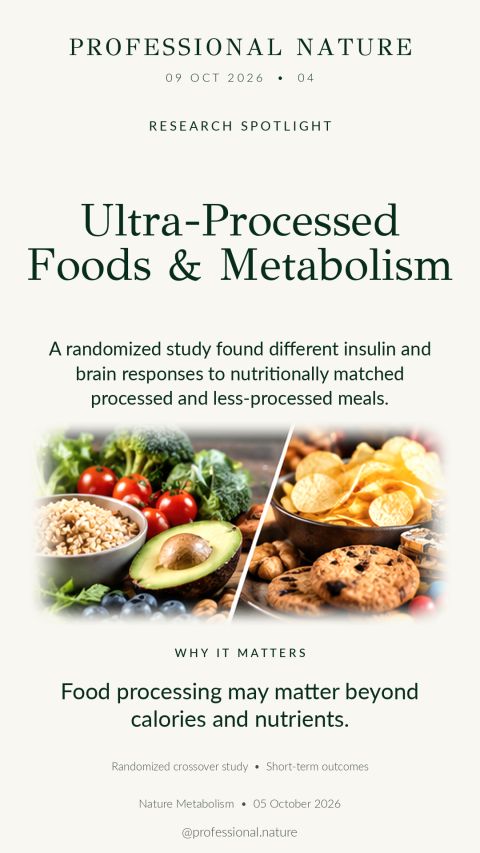
A randomized crossover study published in Nature Metabolism investigated how the body responds to nutritionally matched processed and less-processed meals.
Researchers reported differences in insulin responses and brain activity after participants consumed the different meals.
These findings suggest that nutritional composition alone may not fully explain how food affects the body.
What Did the Study Find?
The researchers compared short-term physiological responses to meals with different levels of processing.
Although the meals were designed to have similar nutritional profiles, participants showed different metabolic responses.
The findings included differences in insulin regulation and brain responses.
These observations suggest that food processing may influence how the body handles nutrients after eating.
However, the study focused on short-term outcomes and did not establish long-term disease risk.
Why Do Ultra-Processed Foods Matter?
Food processing can change the physical structure, texture and characteristics of ingredients.
Some processing methods may influence how quickly people eat, how food breaks down during digestion and how nutrients become available for absorption.
Ultra-processed products can also differ considerably in their nutritional composition.
Therefore, researchers increasingly examine both nutrient content and food structure when evaluating dietary patterns.
What Is the Connection Between Food Processing and Insulin?
Insulin is a hormone that helps regulate blood glucose and supports nutrient metabolism.
After eating, insulin levels naturally change as the body processes carbohydrates and other nutrients.
The study found that participants responded differently to meals depending on their processing level.
However, a higher insulin response after one meal does not automatically indicate diabetes or long-term metabolic damage.
Researchers need additional evidence to understand the clinical significance of these differences.
Why Are Brain Responses Important?
The brain plays an important role in appetite, food preferences and energy regulation.
Researchers are interested in whether food characteristics influence neural responses related to eating behavior.
Differences in brain activity may offer clues about how the body processes food-related signals.
Nevertheless, short-term changes in brain responses do not establish lasting effects on appetite, body weight or cognitive health.
Does This Mean All Processed Foods Are Unhealthy?
No. Processing includes many different methods, such as freezing, drying, pasteurization and fermentation.
These techniques can improve food safety, preservation and convenience.
The term ultra-processed refers to a particular category of industrial food formulations. It should not be confused with every form of food processing.
Nutritional quality, ingredient composition and overall dietary patterns remain important considerations.
What Are the Study Limitations?
The research used a randomized crossover design, which allows participants to experience different dietary conditions.
However, the outcomes were measured over a short period.
The study did not establish whether the observed responses increase the risk of obesity, diabetes or cardiovascular disease.
Further research is needed to understand whether these physiological differences have meaningful long-term health consequences.
Takeaway
Ultra-processed foods may influence short-term metabolic and brain responses in ways that are not fully explained by calories or macronutrients alone.
This randomized study highlights the importance of investigating food structure and processing methods alongside nutritional composition.
The findings support further research, but they do not prove that a single processed meal causes chronic disease.
Research source: Nature Metabolism, 5 October 2026.